


Touchdown Manager
3.9381.00 Reviews
App Specs
- Version
- 8.10
- Updated On
- License
- Free
- Downloads
- 100,000+
- Developer
- Sweet Nitro SL
- Categories
- Sports
- Platform
- Android
Screenshots

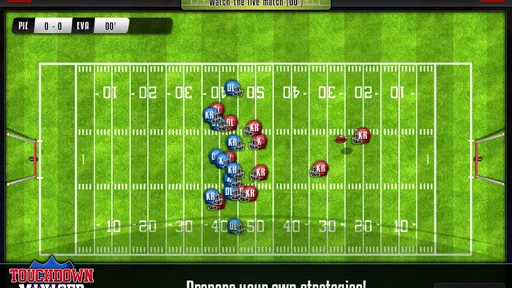
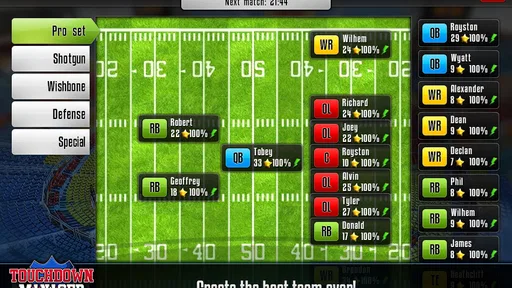
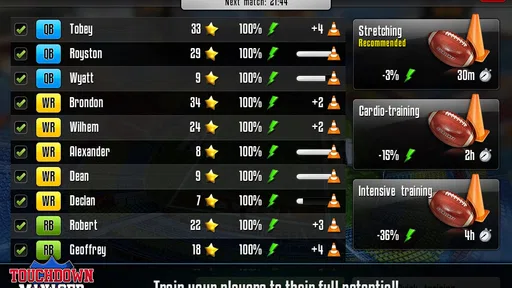
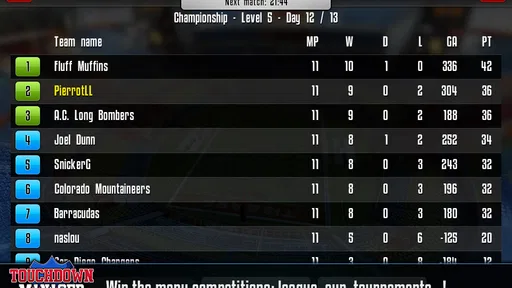

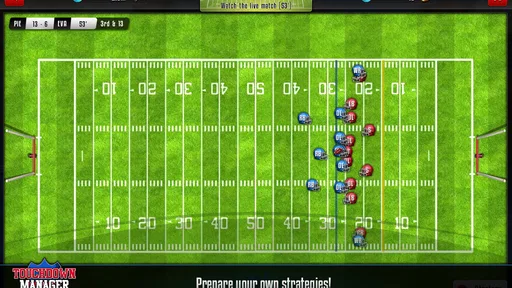
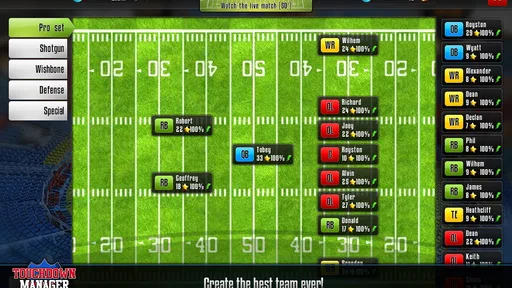
 Analysis by AppCompare
Football management games usually ask me to think several moves ahead rather than react to every play, and Touchdown Manager takes that idea into a compact mobile format. I step into the role of coach, make decisions for my team, and try to turn a group of players into a winning side. That makes it a natural fit for short sessions when I want strategy with a sports theme, rather than a game that demands constant real-time control.
Created by Sweet Nitro SL, this free sports game has been available since October 5, 2016. It is aimed at Everyone, runs on devices using Android 6.0 or later, and the current version is 8.10. Those details matter because the game is not positioned as a brand-new experiment; it is an established mobile title that has continued to receive version changes over time. I found that its appeal comes less from visual spectacle and more from the simple satisfaction of making a plan, seeing how it performs, and adjusting after a poor result.
The store presents it as a way to become a football coach and lead a team to victory, but that description only tells me the broad idea. The more useful question is whether it works for the kind of player who enjoys planning without wanting a full console-style simulation. My answer is yes, with some important qualifications: it is approachable and easy to fit into a routine, but players looking for deep realism, licensed presentation, or highly detailed control may eventually find it limited.
How Touchdown Manager feels today
My first impression is that the game is built around quick decisions and repeatable progress. I can open it when I have a few spare minutes, review what is happening with my team, make a coaching choice, and leave without needing to reserve a long uninterrupted session. That rhythm suits a phone much better than a management game that expects me to study a huge database before I can understand what matters.
The central fantasy is straightforward: I am not controlling every athlete directly. I am responsible for the team as a coach, so the enjoyment comes from choosing an approach and accepting the result. That distinction is important. Someone who wants an arcade football game with immediate movement and manual plays should look elsewhere. Touchdown Manager is better for a player who enjoys responsibility from the sidelines and likes comparing a decision with its outcome.
I also appreciate that the sports setting gives ordinary menu choices more emotional weight. A change in approach is not just another button press; it feels connected to whether my team can overcome the next challenge. The game works best when I treat each session as a small coaching problem rather than rushing through every available action. That mindset makes the experience more satisfying and helps prevent it from becoming a repetitive sequence of taps.
At the same time, the compact design means I should not mistake it for a full professional management simulator. I would not choose it if I wanted exhaustive tactical diagrams, a detailed transfer market, or the kind of match analysis found in larger computer and console alternatives. Its strength is accessibility. It gives me a football-coach role without making me learn an intimidating system before I can enjoy the first session.
Worth Reading Before You Choose

EA SPORTS FC Mobile 26 Is a Bigger Football Game, but It Takes Time

Flipboard Shows What News Apps Must Do Beyond the Feed

Switching to Android Auto Means Rethinking Your Driving Routine

Google Calendar Makes a Crowded Week Easier to Manage

Ludo King Makes the Most of the Minutes Between Plans

Baby Panda World Brings Quick Play to Modern Phones, but Its Game Library Feels Busy
A practical way to play during a busy day
A realistic use case is a short break between errands or during a commute. I can check the team, consider the next challenge, and make a decision without needing headphones, a controller, or a large screen. If the result goes badly, the disappointment is manageable because the game encourages me to think about what I would change next time. That makes it more suitable for casual daily play than for a single long marathon.
My advice is to avoid treating every match as a test that must be solved immediately. I get more from the game when I pause to identify the decision that caused trouble. Was I too aggressive? Did I ignore the condition of the team? Did I choose an option simply because it looked powerful rather than because it suited the situation? Even when the game does not offer the depth of a specialist simulator, asking those questions gives the basic loop more meaning.
Another useful habit is to decide in advance how much time I want to spend. Because the game is free to download, it is easy to keep checking it repeatedly, especially when progress feels close. Setting a small session limit helps me judge whether I am enjoying the coaching decisions or merely chasing the next reward. That distinction becomes more important once optional purchases enter the experience.
What the long-running version tells me
The current version, 8.10, shows that the game has not remained frozen since its original release. I see that as a positive sign for existing users because a title that survives across several years has had time to settle into its identity. However, a version number alone does not tell me that every part of the game has been transformed. I would interpret the update history as evidence of ongoing maintenance and evolution, not as a promise of a completely redesigned experience.
For a new player, that distinction is helpful. I would install it expecting the established coaching concept to remain at the center, rather than assuming the latest version has turned it into a different genre. Existing players can reasonably expect the current build to represent the most up-to-date form of the game, but they should still judge it by the same core question: do the team decisions remain interesting after the novelty wears off?
The age of the title also affects how I compare it with newer sports games. Touchdown Manager has the advantage of a clearly defined, familiar format, while newer competitors may offer flashier presentation or broader systems. I prefer this game when I want a lighter management experience that gets to the point. I would prefer a larger alternative when I want a realistic career, extensive customization, or a more dramatic match-day atmosphere.
Its audience numbers support that sense of durability. The game has passed 100 thousand installs and has an average rating of 3.9 from around 2.5 thousand ratings, with 381 written reviews. I read that as a reasonably healthy but not universally loved reception. It suggests that many players find the concept worthwhile, while the less-than-perfect average is a reminder that the streamlined design and monetization will not suit everyone.
What changed matters to people already playing
For someone returning after a long break, I would not assume that memory alone is enough to judge the current build. The move to version 8.10 means the practical experience may feel more settled than an old installation, and compatibility with newer devices can be a more important improvement than a dramatic new feature. I would update before deciding whether the game has lost its appeal, because older impressions may reflect a less current version.
For someone starting today, the main benefit is a lower barrier to entry. I do not need to approach it like a long-running hobby with years of accumulated knowledge. I can learn the coaching loop through play and gradually decide whether the strategic layer is deep enough for me. That makes it a gentler introduction to sports management than a dense simulation filled with unfamiliar terminology and dozens of screens.
Returning players should also reconsider how they spend resources. In a game that has evolved over time, old habits may not remain efficient. I would test a few different approaches instead of automatically repeating the strategy that worked in an earlier version. This is one of the more valuable ways to experience an updated management game: not simply asking whether it looks different, but checking whether my old decision-making still produces good results.
The free entry point is another meaningful change in the user experience, even though it is not a version feature by itself. I can try the basic game without paying first, which makes the decision to install relatively low risk. The trade-off is that optional purchases range from $4.99 to $99.99 per item. I would therefore decide on a personal spending limit before getting invested, particularly if progress starts making purchases feel tempting.
Where the experience still has limits
The biggest limitation for me is the likely gap between a streamlined mobile coach game and a full simulation. Touchdown Manager can make me feel responsible for a team, but players who want every aspect of a club’s operation represented may want more detail than this format is designed to provide. If my ideal game includes deep scouting, complex finances, long-term contracts, and highly granular match reports, I would choose a specialist management title instead.
The second limitation is presentation. A compact sports-management game does not provide the same immediacy as manually controlling a match. I cannot recommend it to someone whose favorite part of football games is dribbling, tackling, or executing a play with precise timing. The correct comparison is not a direct-control sports game; it is a lighter coaching alternative that turns the match into a result of decisions.
There is also a potential repetition problem. The early sessions benefit from learning the system and discovering which choices fit different situations. Later, the experience depends on whether the underlying decisions continue to feel meaningful. I found that taking a reflective approach helps, but players who need constant new content may become less engaged than players who enjoy refining a familiar routine.
Monetization deserves the most practical caution. Since the game is free, optional purchases are understandable, but the upper end of the listed range is substantial for a mobile title. I would not spend simply to solve a single frustrating result. First I would replay, change my approach, and see whether patience or better planning is enough. If the progression feels enjoyable without payment, that is a strong reason to keep playing casually; if spending starts to feel necessary, the game may no longer be good value for me.
Device compatibility is fairly broad for an older Android game because the minimum requirement is Android 6.0. Still, I would check that my phone has enough free space and that the current build behaves well on my particular device before committing to long-term play. The listed operating-system requirement tells me whether installation is possible, but it does not guarantee identical performance across every handset.
Who should try it, and who should skip it
I would recommend Touchdown Manager to someone who likes football strategy but wants a manageable mobile experience. It is especially suitable for players who enjoy making a decision, observing the result, and trying a different plan later. It also works for people who want a free starting point before paying for a larger simulation, provided they understand that the simpler design is part of the appeal rather than a temporary tutorial.
I would also suggest it to casual sports fans who do not want to memorize a complicated control scheme. The Everyone rating makes it broadly approachable from an age standpoint, and the coaching premise is easy to understand even if I am not an expert in management games. The best experience comes from curiosity: I want to know why a choice succeeded, not merely watch the team win.
I would skip it if I need official presentation, realistic club administration, or direct control during every play. I would also be cautious if I dislike free-to-play systems in general, because the available purchase range means the financial side should be considered before I become deeply invested. Someone looking for a one-time purchase with a clearly fixed cost may be happier with a premium sports-management game.
Players who prefer very fast action should skip it for a different reason. The coaching role creates distance from the action, and that distance is exactly what some people enjoy. If I want immediate feedback from a joystick or touch control, the game may feel too indirect. Choosing it because it is a football game, while actually wanting an arcade match, would lead to disappointment.
Small decisions that improve the experience
My first concrete tip is to treat losses as information rather than as a reason to purchase something. After a poor result, I would change one major decision at a time. If I alter everything at once, I cannot tell what helped. This simple method turns the game into a small experiment and makes the coaching theme feel more authentic.
Second, I would avoid spending early. The free version gives me a chance to learn whether I enjoy the decision loop itself. A purchase can speed up a moment, but it cannot make an uninteresting core system more engaging. I would only consider paying after several sessions in which I still want to return for the strategy, not because I feel pressured by a temporary setback.
Third, I would use the game as a short planning exercise rather than leaving it open constantly. Checking at random can make progress feel like a chore. A better routine is to play at a consistent time, review what happened, and stop once I have made a meaningful decision. That keeps the title in the space of relaxing sports strategy instead of turning it into another notification-driven obligation.
Finally, I would compare my expectations with the game’s scale. The current build is worth evaluating as a focused mobile coach experience, not as a replacement for every type of football game. That framing prevents unfair criticism and also makes the genuine weaknesses easier to see. A simple system can be enjoyable, but simplicity should not be confused with unlimited depth.
My final recommendation
Touchdown Manager remains an appealing option for a specific kind of football fan: someone who wants to guide a team, make compact strategic choices, and play in short bursts. Sweet Nitro SL has kept the title available through a long period of mobile gaming, and version 8.10 gives new and returning players a current starting point. The 3.9 average rating reflects my own balanced view: there is a worthwhile idea here, but it is not a universal substitute for a full sports simulator.
I like the game most when I approach it patiently, keep my spending controlled, and focus on learning from decisions rather than chasing instant success. Its free price makes trying it easy, while the Everyone rating and Android 6.0 minimum make it accessible to a broad audience. The optional purchases, including items priced as high as $99.99, are the main reason I would advise setting boundaries before playing regularly.
My recommendation is to try it if you want a lightweight football coaching game, not a complete professional-management simulation. Give it enough time to reveal whether its decisions stay interesting for you, and compare that feeling with what you expect from the usual alternatives. If you enjoy the role of the coach and the satisfaction of adjusting a plan, it can earn a place in a daily mobile rotation. If you need direct action, deep realism, or a fixed-price experience, another sports game will probably be the better choice.
Looking ahead, I would watch how future versions continue to balance accessibility with meaningful strategy. The important question is not simply whether the version number rises, but whether returning players still have reasons to rethink their approach and whether new players can understand the game without unnecessary friction. For now, Touchdown Manager is a practical, approachable choice for casual football strategy, with enough personality to recommend but enough limitations to make expectations essential.
Pros
- Simple controls make it easy to manage matches and lineups.
- Short sessions suit quick play on mobile devices.
- Offers a satisfying sense of progression for football fans.
- Runs well on many older Android and iOS devices.
- Useful for players who enjoy tactical decisions over action gameplay.
Cons
- Limited visual variety can make matches feel repetitive over time.
- Some features may take time to unlock through regular play.
- The interface may feel dated compared with newer sports games.
- Tactical options are less detailed than in full football simulators.
- Replay value depends heavily on how much you enjoy management gameplay.
FAQs for Touchdown Manager
What is Touchdown Manager, and what do you do in the game?
Touchdown Manager is an American football management game in which you take responsibility for building and directing your own team. Instead of controlling every player manually during a match, you focus on decisions such as recruiting athletes, improving facilities, setting tactics, managing training, and preparing your squad for competition. The game is aimed at users who enjoy strategy, planning, and long-term team development more than fast arcade action.
Can I play Touchdown Manager without an internet connection?
The availability of offline play may depend on the version of Touchdown Manager installed and the feature you are trying to use. Basic menus or previously loaded content may sometimes remain accessible, but online services are generally required for account synchronization, competitive events, updates, advertisements, and other connected features. It is best to launch the game with a stable connection, especially during the first setup, and check its current store description for the latest offline limitations.
Is Touchdown Manager free to download, and does it include in-app purchases?
Touchdown Manager can generally be downloaded without an upfront purchase, but free access does not necessarily mean that every feature is completely cost-free. Games in this category commonly offer optional in-app purchases for premium currency, faster upgrades, additional resources, or other conveniences. You can usually progress through regular play, although spending may reduce waiting times. Review the store listing and your device’s purchase settings before downloading if you want to avoid accidental transactions.
Does Touchdown Manager require a powerful phone or tablet?
Touchdown Manager is primarily a management and strategy experience, so it normally places less demand on a device than a graphically intensive action game. Most recent Android phones, iPhones, and tablets should be able to run it, provided they use a supported operating-system version and have enough free storage. Performance can still vary with older hardware, limited memory, or background applications. Keeping the system updated and closing unnecessary apps can help prevent slow menus or unexpected crashes.
Is Touchdown Manager suitable for beginners who do not know American football?
Yes, beginners can enjoy Touchdown Manager, although understanding a few basic American football concepts will make the tactical choices easier to follow. The game’s management structure allows you to learn gradually through team building, training, fixtures, and match results rather than requiring expert knowledge immediately. New players should begin with the tutorial or recommended settings, avoid changing too many tactics at once, and use early matches to understand how player development and team balance affect performance.


